Salary transparency: the example of Shine!
Greg Taieb · · 2 min read
Wage uncertainty is truly a problem in the world of work, with many negative consequences:
1. Salary inequalities: Without transparency, we risk ending up with big inequalities, especially between men and women in similar positions.
2. Employees are not happy: When salaries are unclear, you may have the impression of being paid less than your colleagues in the same position, and that can demotivate you.
3. Too much turnover: If you think you're poorly paid, you're tempted to look elsewhere. As a result, there are too many departures and the company has to spend more to recruit.
4. Bad atmosphere: The mystery around salaries can create tension and distrust between colleagues, and it destroys team spirit.
5. It's difficult to negotiate: Without clear information on salaries, it's not easy to negotiate increases or benefits, and that can slow down your progress.
6. We have the impression that it is not fair: If salaries are opaque, we may think that decisions are taken on a whim, without clear criteria, and that gives a bad image of the company.
By being more transparent about salaries, companies can boost the confidence of their employees, encourage equal pay and improve staff commitment and loyalty.
Despite all this, many traditional companies maintain this opacity. That's why I loved the salary simulator from the startup Shine.
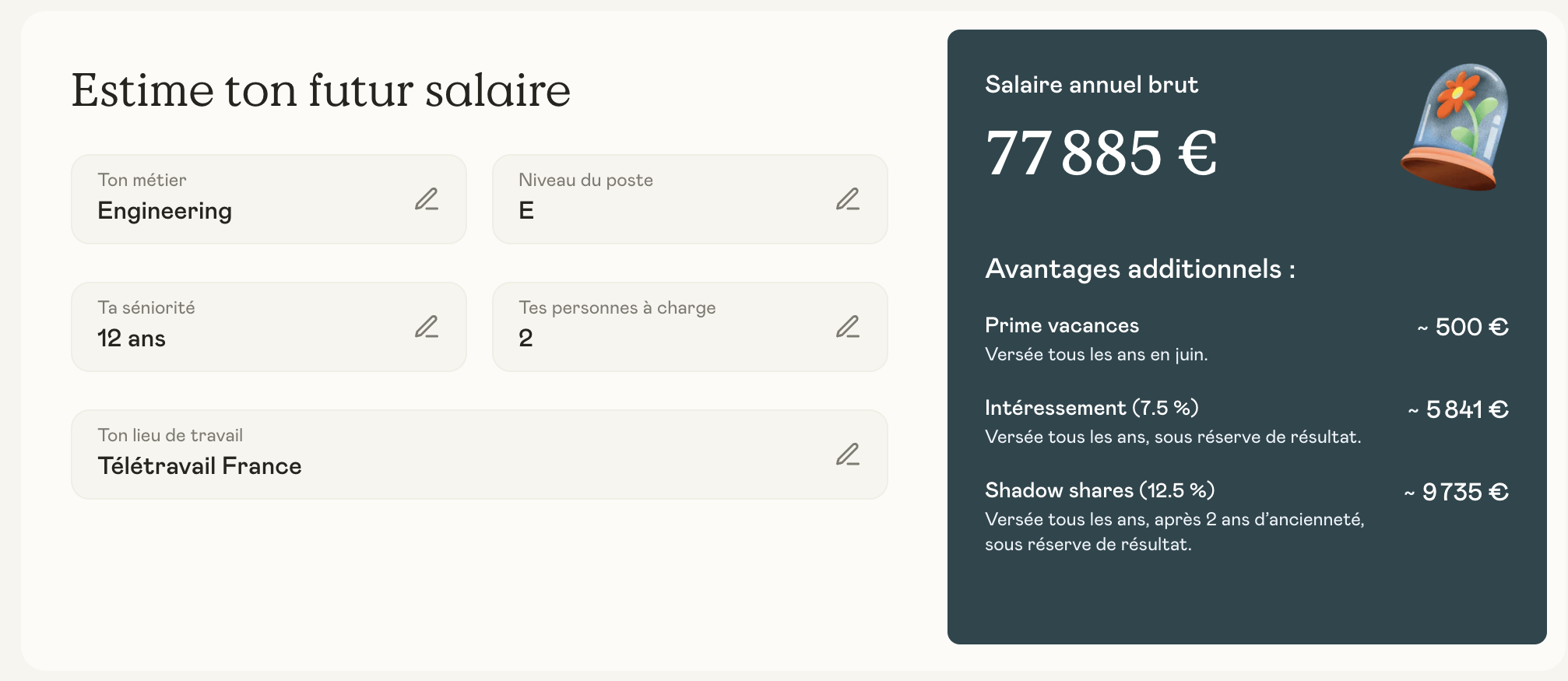
With Shine, you choose criteria such as profession, level of experience, seniority, teleworking and others, and your salary is automatically adjusted. In addition to knowing what to expect, you see what criteria affect the evolution of your remuneration.
I was surprised to see that they offer a bonus of €2,500 per dependent - it's rather original. They are also transparent about variable remuneration, and they give a list of additional benefits, such as teleworking, RTT, subsidies for sport and travel, and restaurant tickets.
Their entire approach is explained on this page:


Yoann, one of my readers also share with me the approach of Shodo, a dev company which has also published its own simulator on its site.
I am all for this transparency - and what do you think?